
What Is an SMP Server in Minecraft? A Beginner's Guide
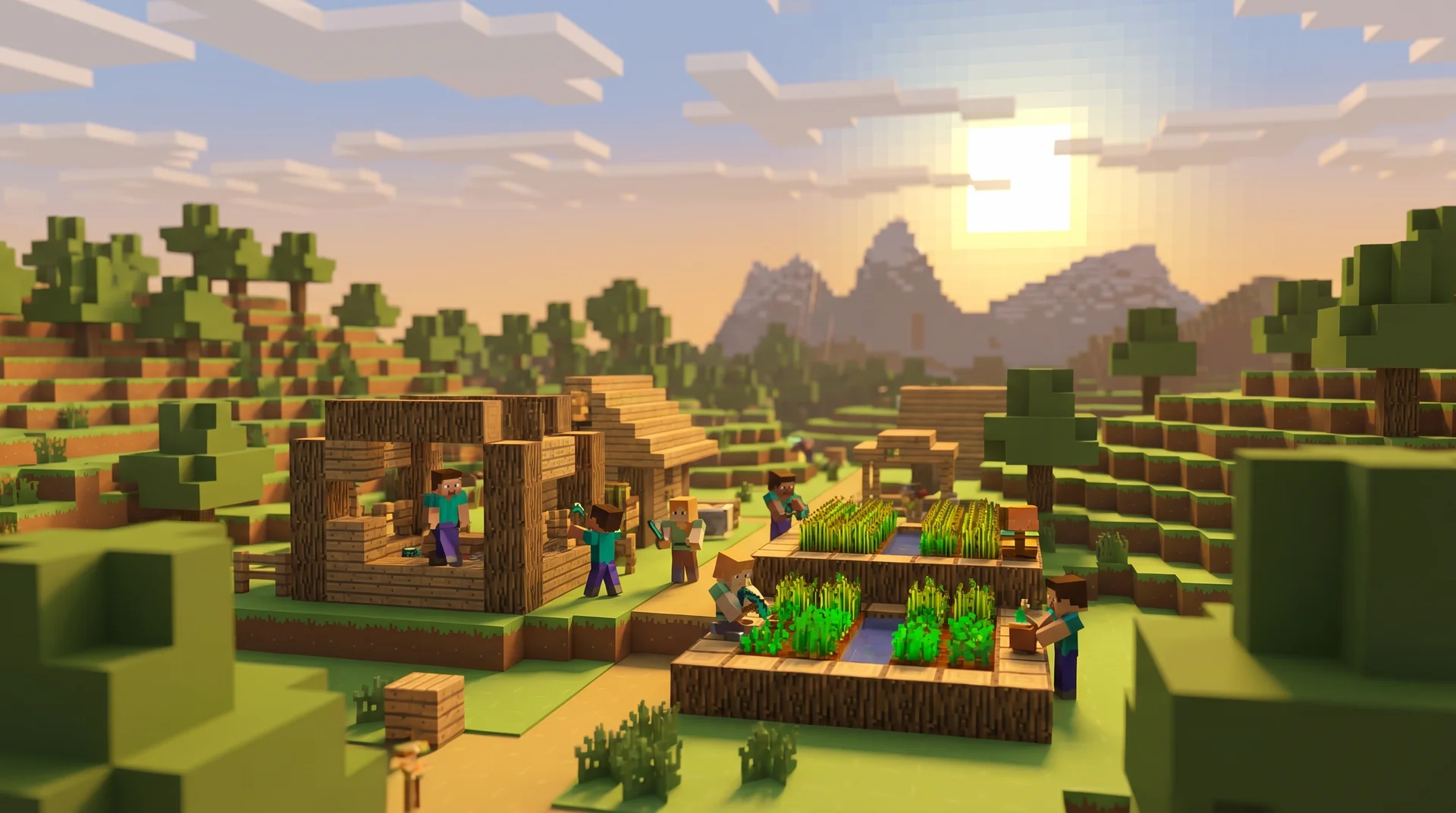
SMP servers are Minecraft's most popular way to play survival together. Learn what an SMP server is, how the main types work, and how to find an active one.
If you have spent any time looking for a Minecraft community, you have almost certainly run into three letters over and over: SMP. They show up in server names, YouTube titles, and Discord invites, but newcomers rarely get a straight answer about what they actually mean. This guide explains what an SMP server is, how the different kinds work, and how to find one that is actually worth your time.
What does SMP mean in Minecraft?
SMP stands for Survival Multiplayer. In its simplest form, an SMP is a Minecraft server running the normal survival game mode — gathering resources, fighting mobs, managing hunger — but shared by more than one player. Instead of building alone in single-player, you join a persistent world where other people are mining, farming, trading, and building at the same time.
The phrase has drifted a little over the years. Today "SMP" is often shorthand for a community-driven survival world with a recognizable group of players, rather than just any survival server. Some are tiny friend groups; others, like the survival communities we track at Minecraft-Stats, pull in thousands of players at once.
How an SMP server actually works
Most SMPs share a few core ingredients:
- A persistent world. The map keeps running whether or not you are online, so your builds, farms, and bases are still there when you log back in.
- Shared progression. Economies, towns, and rivalries form because everyone is playing in the same world over weeks or months.
- Light rules and plugins. Many add land claiming, chat moderation, or basic anti-grief tools, while staying close to the vanilla survival experience.
That last point is what separates an SMP from a minigame network. On a server like Hypixel you queue into self-contained rounds; on an SMP, there is one continuous world and your actions have lasting consequences.
The main types of SMP servers
Not all SMPs play the same way. When you are choosing one, it helps to know which flavor you are signing up for.
Vanilla and semi-vanilla SMPs
These stick close to unmodified Minecraft, sometimes adding quality-of-life plugins but keeping the core survival loop intact. They suit players who want the "pure" experience with company. Smaller curated communities like EchoSMP fit here — a more intimate world where you tend to recognize the regulars rather than melt into a crowd.
Large public survival servers
At the other end of the scale are big, polished survival networks that run survival as one mode among many, with ranks, cosmetics, and busy economies. rapy is a good example of a high-traffic survival world: it has been climbing steadily since we started tracking it, with a recorded peak of %PLAYER_COUNT_PEAK_HIGH_454% players and roughly %PLAYER_COUNT_REALTIME_454% online right now. ReallyWorld is another long-running survival community, currently sitting around %PLAYER_COUNT_REALTIME_130% players.
Anarchy and hard-SMP servers
Some SMPs strip the rules away on purpose. Anarchy-leaning servers allow raiding, griefing, and open PvP, turning survival into a high-stakes game of trust and betrayal. The most popular example by far is DonutSMP, which has grown into one of the busiest servers we track of any kind — around %PLAYER_COUNT_REALTIME_134% players are usually online, against an all-time peak of %PLAYER_COUNT_PEAK_HIGH_134%. It proves that "SMP" no longer means small.
Private and whitelisted SMPs
The original SMP idea — a closed world for a fixed group of friends or creators — is still everywhere. These run behind a whitelist, so you need an invite to join. They are perfect for tight-knit play but, by design, you will not find them on a public list.
How to choose the right SMP server
With more than 500 servers tracked on Minecraft-Stats alone, picking one can feel overwhelming. A few signals cut through the noise:
- Check the live player count. An empty world is a lonely world. Servers that consistently hold players through the day usually have a healthier community than ones that spike once and fade.
- Look at the trend, not just the moment. A server's history tells you whether it is growing or quietly dying. Every server page on Minecraft-Stats charts its player count over time, so you can spot a community on the rise.
- Match the rules to your taste. Do you want claimed land and a relaxed build server, or the adrenaline of an anarchy world where nothing is protected? Decide before you invest weeks into a base.
- Mind the version and region. Make sure the server supports your Minecraft version (Java or Bedrock) and that its players are active in your time zone.
Why player-count data matters
The single most useful thing you can do before joining an SMP is look at its numbers. Player count is the clearest signal of whether a community is alive, and the shape of that count over days and weeks tells you even more. A server holding a steady evening peak is in good health; one whose graph is sliding downward may not be worth building a months-long base on.
That is exactly why we ping every server on a fixed schedule and keep the full history. You can browse the busiest worlds on the main server list, open any server to see its growth chart, and compare options side by side before you commit. For more breakdowns like this one, the Minecraft-Stats blog covers rankings, spotlights, and trends across the servers we track.
The bottom line
An SMP server is simply survival Minecraft made social — but under that one label sits everything from a five-friend whitelist world to anarchy giants with tens of thousands of players. Decide what kind of survival you want, check the live data to make sure the community is real and active, and you will skip the empty lobbies and land somewhere you actually want to stay.